Riding 101
4 min read
Updated on March 16, 2026

Supersport vs Sport vs Standard

If you’ve ever wondered how Supersport, Sport, and Standard motorcycles differ in riding position, styling, performance, and ideal use, you’ve come to the right place.

supersport-vs-sport-bike-vs-standard-img

What’s the Difference & Which Fits Your Needs?

Walk into any dealership or scroll through motorcycle websites, and you’ll notice it immediately: a lot of bikes look really fast. Full fairings. Low bars. Aggressive stance. They promise speed before you even see the spec sheet.

And it’s easy to assume race-bike looks equal performance. On the street, though, the bike that looks fastest isn’t always the one you’ll love riding most. The right bike suits how and where you’ll actually ride it, and how you’ll feel when you’re in the saddle.

If you’ve ever searched “what is a sport bike?” or “what is the difference between a sport and a standard motorcycle?” you’re in the right place. Supersport, sport, and standard motorcycles share performance DNA. What separates them is purpose. Riding style. And the kind of experience you want every time you roll on the throttle.

Understand those differences, and choosing that perfect two-wheeled partner becomes much easier. More intentional. More personal.

Here’s a quick breakdown before we dive deeper:

At-a-glance

Feature Supersport Sport Standard
Riding Position Aggressive, forward-leaning Moderately forward Upright and neutral
Fairings Full race-style Full or partial Minimal or none
Engine Character High-revving peak power Broad mid-range Linear and usable low-to-mid range
Best For Track days, advanced riders Commuting + weekend canyon carving Urban riding, new riders

What defines each category?

supersport-vs-sport-bike-vs-standard-img-4
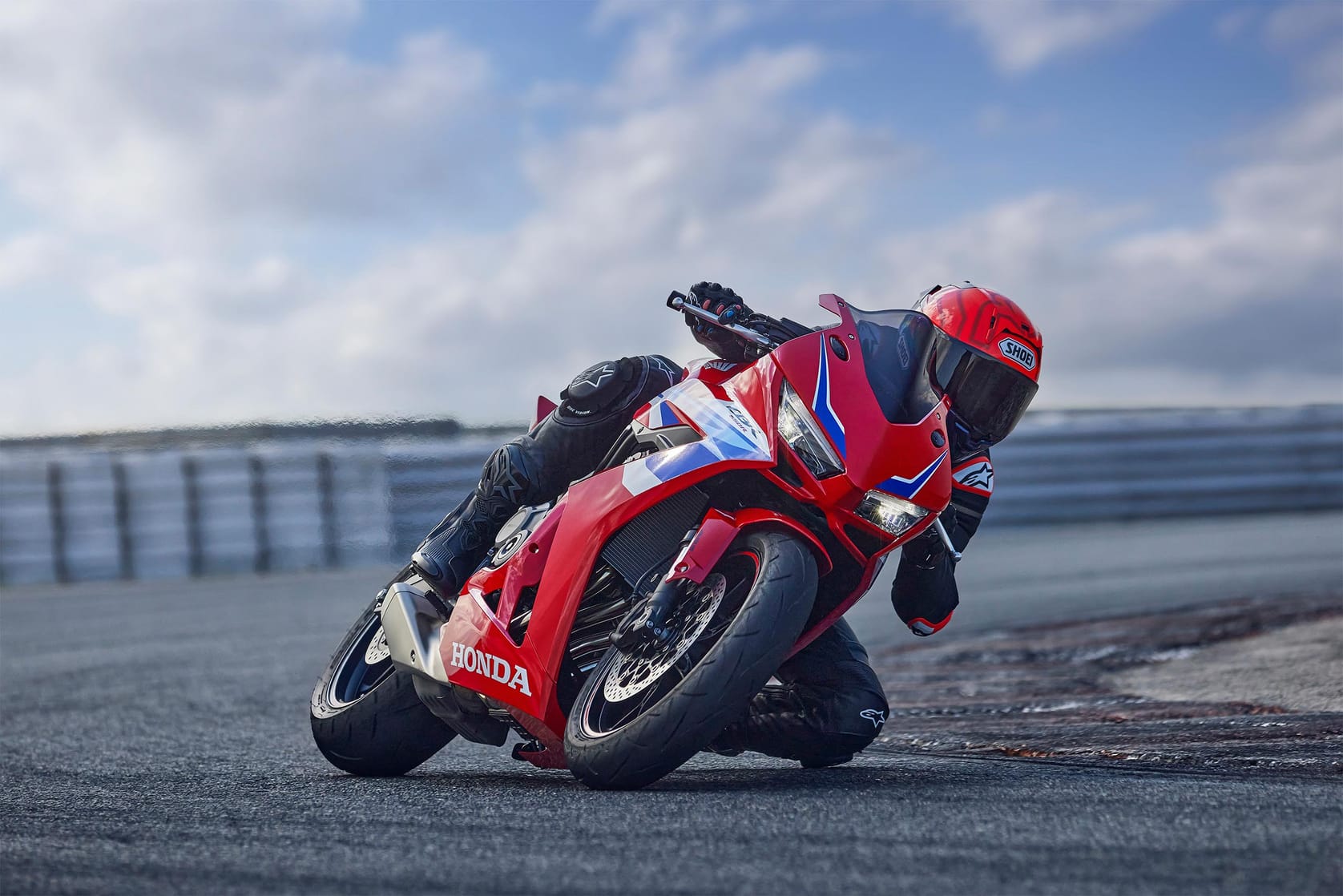
Supersport motorcycles are typically street-legal race bikes, featuring full fairings, aggressive riding positions, and high-revving engines.

Supersport: street-legal racers

At the sharp end of the spectrum sits the Supersport category. These motorcycles are as close as you can get to a street-legal race machine. You’ll find low clip-ons mounted beneath the triple clamps, high rear-set footpegs for cornering clearance, and steering geometry tuned for immediate response. Everything is built around outright capability.

Honda’s flagship here is the CBR1000RR-R Fireblade SP, a true race-replica platform. It’s not just inspired by racing. It’s actually used for racing. The Fireblade SP forms the foundation of the Real Steel Racing Superbike that Hayden Gillim campaigns in the MotoAmerica series. And that’s not marketing language. That’s a direct line from showroom to starting grid.

The Fireblade SP features MotoGP-influenced aerodynamics, a high-revving inline-four engine tuned for peak power, advanced electronics, and premium Ohlins suspension built for high-speed precision. Every element exists for one reason: to go faster.

Step down in displacement, and the CBR600RR continues the Supersport tradition. Compact. Razor-sharp. Built to thrive at even higher rpm. It rewards smooth inputs and committed technique, designed to hit every apex with pinpoint accuracy.

supersport-vs-sport-bike-vs-standard-img-3
Sport motorcycles still feature full fairings and share a family resemblance with Supersport machines, but they’re typically less aggressive and better suited for everyday street riding.

Sport: racing meets the real-world

The balance between innovation and engagement defines this category. Sport bikes maintain clip-ons and an engaged riding position, but with a more forgiving posture and power delivery typically focused on the mid-range. You get real performance, just without the intensity or the sore wrists that come with Supersport ergonomics.

Honda’s CBR650R is a prime example. Inline-four performance. Athletic styling. Manageable ergonomics. It also features Honda’s revolutionary E-Clutch system, which removes the worry of stalling and enables clutch-free shifting while retaining full manual control.

For those newer to riding, the CBR500R offers a lighter, more approachable entry point. Confidence-inspiring, but still sporty, it delivers full-fairing looks and responsive handling with usable performance. It’s the kind of bike that encourages you to keep riding, not count down the miles.

supersport-vs-sport-bike-vs-standard-img-2
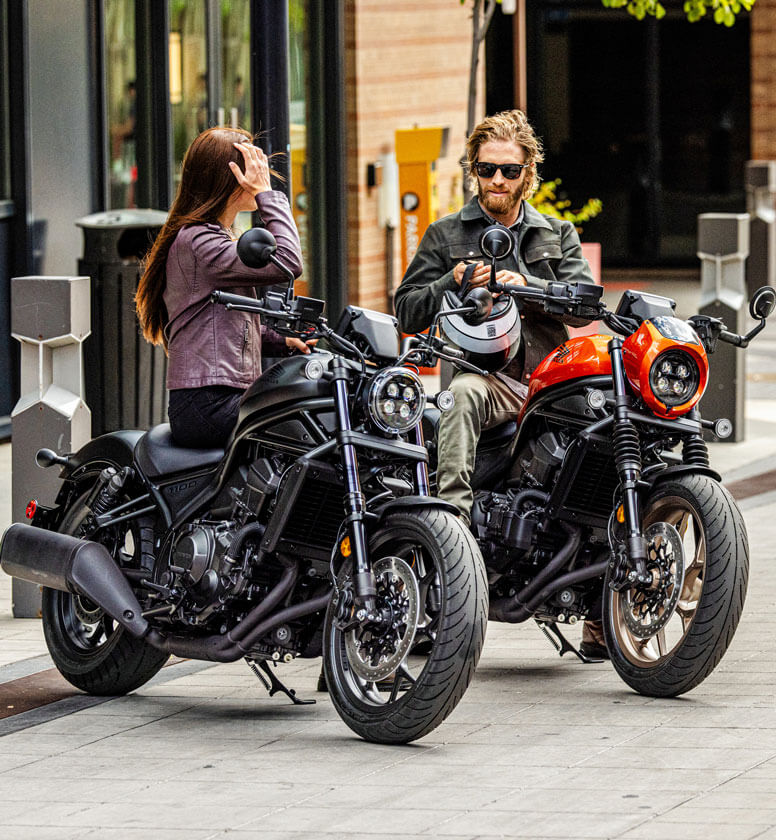
Standards are the most comfortable of the bunch, with an upright riding position and manners tuned totally for road use.

Standard: upright ease with speed

Standard motorcycles, often called streetfighters or naked bikes, approach performance slightly differently. No full fairings. No extreme riding position. Just upright control, everyday versatility, and bold naked presence.

They typically feature one-piece handlebars, neutral footpeg positioning, and broad, usable power at low-to-mid rpms. At the top of Honda’s lineup sits the CB1000 Hornet SP. This is no entry-level commuter. It’s a high-performance streetfighter with aggressive styling, strong power delivery, and premium suspension in a relaxed riding triangle. It proves that “upright” doesn’t mean “mild”.

The CB750 Hornet brings that attitude to the middleweight class, pairing punchy parallel-twin performance with approachable ergonomics and the stall-free smoothness of Honda E-Clutch. And for less-experienced riders looking to enter the naked bike scene, the CB500 Hornet delivers accessible performance and everyday practicality on a confidence-building platform. It’s a bike you build skills with and keep enjoying for a long time.

Ergonomics and comfort

The differences in these three categories become apparent the second you swing a leg over and sit down. On a Supersport, weight shifts forward. Wrists carry the load, and your core engages. The position sharpens front-end feel and improves aerodynamic efficiency at speed. Purposeful. Aggressive. Intentional in every detail.

Sport bikes ease that intensity. You’re still engaged, just less compressed. The reach shortens. Wrist pressure reduces, but the connection remains. It feels athletic, not exhausting.

Standards keep you upright and centered. The cockpit opens up, and comfort increases. For many riders, especially those building experience, the neutral stance and increased ability to touch with both feet feel more natural.

Handling and performance

How a bike fits you is one thing. How it responds beneath you is another. Supersports react instantly. Aggressive steering angles, firm suspension, and high-rpm engines reward precise inputs. On track, that focus shines. On public roads, it requires attention and experience.

Sport bikes expand the operating window. Stability increases. Mid-range torque makes acceleration accessible. They feel lively without needing constant high-rev riding. They turn everyday pavement into something worth leaning into.

Standards emphasize predictability. Neutral steering. More compliant suspension. Linear power delivery. This balance supports commuting, canyon rides, and skill development alike. They make performance approachable.

supersport-vs-sport-bike-vs-standard-img-1
Picking the right bike comes down to more than spec sheets and numbers. It’s about finding the one that fits you and makes you want to keep riding.

Which is best for you?

There’s no universal answer. Only the one that matches where you want to ride and what excites you most.

For daily use and city traffic, standards are manageable and still pack tons of fun. The upright riding position reduces strain and increases awareness in stop-and-go conditions. And with models such as the CB750 Hornet and CB650R now offering Honda E-Clutch, experiencing a streetfighter has never been easier.

Weekend riders chasing endless canyon curves will lean toward Sport bikes like the CBR650R. Sharp handling. Balanced ergonomics. Real-world usability. It’s the kind of machine that makes you choose the long way home.

Track-focused riders seeking to chase lap times will choose Supersport models such as the CBR1000RR or CBR600RR. Their chassis precision and aggressive setup reward refined technique and commitment. It’s a different kind of satisfaction. One measured in brake markers and apexes.

Each category excels in a different environment. The best choice depends on where you’ll spend most of your miles.

Beyond the spec sheet

Here’s what the numbers don’t show. Two riders with identical experience can ride the same three bikes and walk away with different favorites. Choosing a motorcycle is personal. It’s what catches your eye across the showroom floor. The way the tank fits between your knees. How naturally your hands fall to the bars. Whether the riding position feels confident or cramped.

Performance matters. Riding style matters. But connection matters just as much. The right motorcycle isn’t simply the fastest or the fastest-looking. It’s the one that feels right when you throw a leg over it and still feels right when you roll back into the driveway.

So choose the bike that fits your roads, your experience, and your instincts. Then twist the throttle and enjoy. The rest will come naturally.

View all Stories
choosing-the-right-rebel-300-500-or-1100-img-small

Choosing the right Rebel: 300, 500, or 1100?

8 min read
Riding 101
Moto-story-1_small

Your first day at the motocross track

9 min read
Riding 101
RecUtility-ATV_small

Beginner's guide to choosing the right ATV

15 min read
Riding 101
REBEL_MY24_05397_rt_medres_small

How to choose your first motorcycle

13 min read
Riding 101