All-day comfort. All-weather capability.
The Pioneer 1000 is built for places a car cannot go. The Pioneer 1000 Elite adds a sealed cab and HVAC system to help keep occupants more comfortable when the weather turns hot, cold or unpredictable. Bringing those systems together with the capability customers expect from a Pioneer required more than a new set of features. It required careful development, extensive testing and expertise from across Honda.
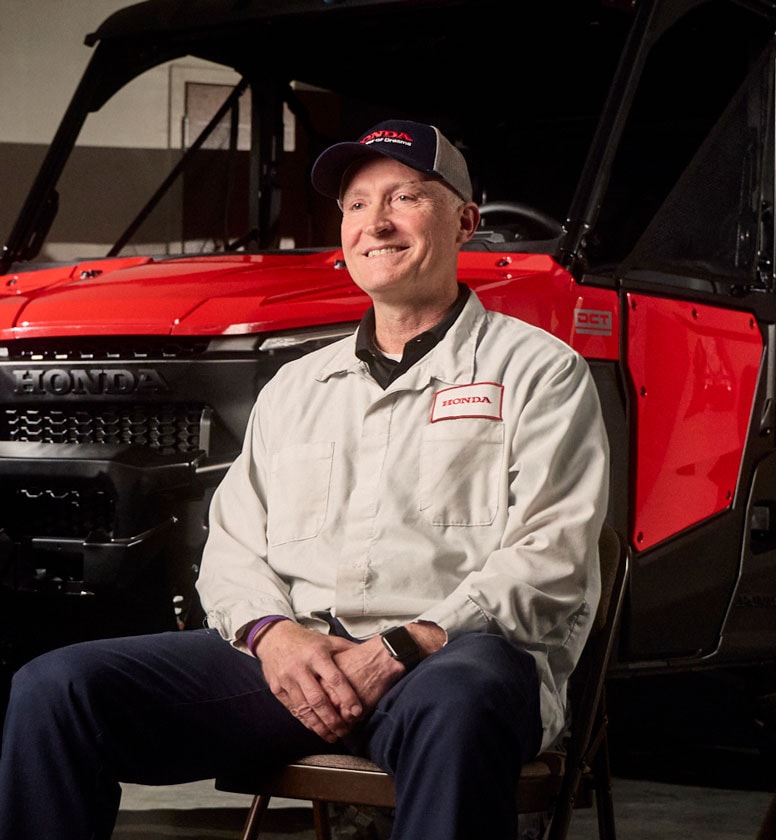
Episode 4 of our Built By series goes inside Honda’s Ohio operations to see how the powersports and automobile development teams shared resources, test methods and experience while bringing the Pioneer 1000 Elite to life.
Designed to work where you work
A sealed cab changes the side-by-side experience. It helps create a more comfortable environment for long workdays, demanding trails and the changing conditions that come with being outdoors.
For the Elite, comfort had to work as part of the complete vehicle. The cab, HVAC system and vehicle performance all had to be developed together. The system needed to support the Pioneer’s work and recreation capability while giving occupants a more controlled environment inside the cab.
That created a demanding engineering assignment. The team had to understand how the vehicle would be used in the field, then develop a way to measure how the cab and HVAC system performed under the conditions customers may encounter.
So much knowledge, so close by
Honda’s automobile development division is located next door to its powersports operations in Ohio. That proximity gave the Pioneer team access to testing equipment, development methods and experience that could help validate the Elite’s sealed-cab systems.
“As Honda, we have a lot of resources at our disposal at a company this big,” explains Test Department Manager Tony Do. “Here in Ohio, we’re fortunate to have the automobile development division right next door.”
The collaboration was not about turning the Pioneer into a car. Powersports engineers understood the agricultural work, off-road recreation and extreme terrain that define a side-by-side. The automotive side brought experience developing vehicles for daily driving, including keeping occupants comfortable through changing weather.
Together, the teams developed test criteria and test modes that reflected the Elite’s specific needs. Automotive equipment helped create controlled conditions, while the powersports team kept the vehicle’s real-world purpose at the center of development.
“For a lot of the technology in this new Pioneer 1000, we were able to put our heads together with our counterparts in automobile development,” Tony says. “We worked on different test criteria and modes, and used their equipment to help develop the vehicle.”
Putting the ‘H’ in HVAC
A comfortable cab has to perform in more than one kind of weather. Honda engineers needed to understand how the Pioneer 1000 Elite’s HVAC system responded to both high and low temperatures, then see how additional environmental stress affected its performance.
At Honda’s Raymond facility, the team used automotive testing equipment to put the system through those conditions. A solar-load dyno let engineers test the Elite in high and low temperatures while adding solar load to simulate the increased stress from intense sunlight.
“Right now we’re on the auto side of our Raymond facility, where they have a lot of useful tools and equipment,” says Power Performance Project Leader Michael Willm. “They have this solar-load dyno that really helps us test the HVAC systems.”
The controlled environment gave the team a repeatable way to evaluate the system. Engineers could vary the temperature, add solar load, push the HVAC system to its limits, and measure its performance.
“We can test in high and low temperatures, and we can add solar load to stress the HVAC system, push it to its limits and understand how well it performs,” Michael adds.
That testing helped Honda build a clearer picture of the Elite’s climate-control performance. It gave engineers a way to identify areas for refinement, quantify the system’s response and develop confidence in how the sealed cab would perform as conditions changed.
Built beyond the standard
Meeting industry standards is great. But it’s not enough for Honda. Especially when it comes to safety, which shaped how they evaluated the Pioneer 1000’s roll cage. The roll cage also plays a vital role (pun intended) in the vehicle’s chassis and handling performance.
As Testing Project Leader Matt Taracko explains, the regulations for this type of vehicle are based on an agricultural standard. Honda meets that standard, then uses additional testing to push the evaluation further.
“For the roll bar testing, we’re borrowing on a lot of our automotive experience. The regulations for these vehicles are based on an agricultural standard, and we meet that standard,” says Matt. “But being Honda, we meet that standard and go beyond it. We use an automotive-style roof crush test, which aligns more closely with what we’ve seen in real-world incidents. We run that test to a much higher level than the current regulation to make sure our roll cage is good for the customer.”
That’s Honda’s engineering mindset. If there’s a standard, they meet it. If there’s an extreme, they raise the bar. Meeting the required standard is the starting point. But testing with real-world use in mind helps the team better understand how the vehicle may perform outside the lab.
Roll-cage development is meticulous, repetitive and technical. The reason behind it is simple: make a vehicle that works well and protects the people who depend on it. Honda takes that responsibility seriously.
Comfort without compromise
The Pioneer 1000 line brings together many demands. It has to work as a side-by-side, feel right on the trail and serve the people who rely on it for real work. The Elite adds a sealed cab and HVAC system that must deliver climate-controlled comfort while remaining part of that complete Pioneer experience.
For Pioneer 1000 Large Project Leader Matt Alexander, Honda’s cross-division resources helped the team meet that challenge.
“There’s a real advantage in our proximity to automotive, and in having an automobile company inside Honda,” Matt says. “We leveraged that experience as we designed, tested and built the Pioneer 1000.”
The benefit went beyond access to equipment. It gave the team another source of experience when new development questions emerged, from testing HVAC performance under solar load to evaluating structural performance beyond the required standard.
“Having that expertise right at our fingertips is an advantage that maybe only Honda has,” Matt adds.
Built for real riding and working conditions
For Production Operations Assistant Manager Marvin Lowery, the collaboration reflects the complexity of bringing the Elite to life.
“Building the Pioneer 1000 is like building a small car,” he says. “We’ve learned a lot from the automotive side. We brought that knowledge here, used it as a benchmark, and we’re running with it.”
The result is a Pioneer 1000 Elite developed around the conditions customers may face outside. Its sealed cab and HVAC system add climate-controlled comfort to a vehicle built for work, recreation and changing weather. Testing those systems helped Honda measure performance in high and low temperatures, apply solar load and refine the experience through controlled evaluation.
That is the focus of Episode 4 of Built By. It looks at the testing, engineering and cross-division collaboration behind a new kind of Pioneer, designed to deliver capability and greater comfort wherever the day leads.